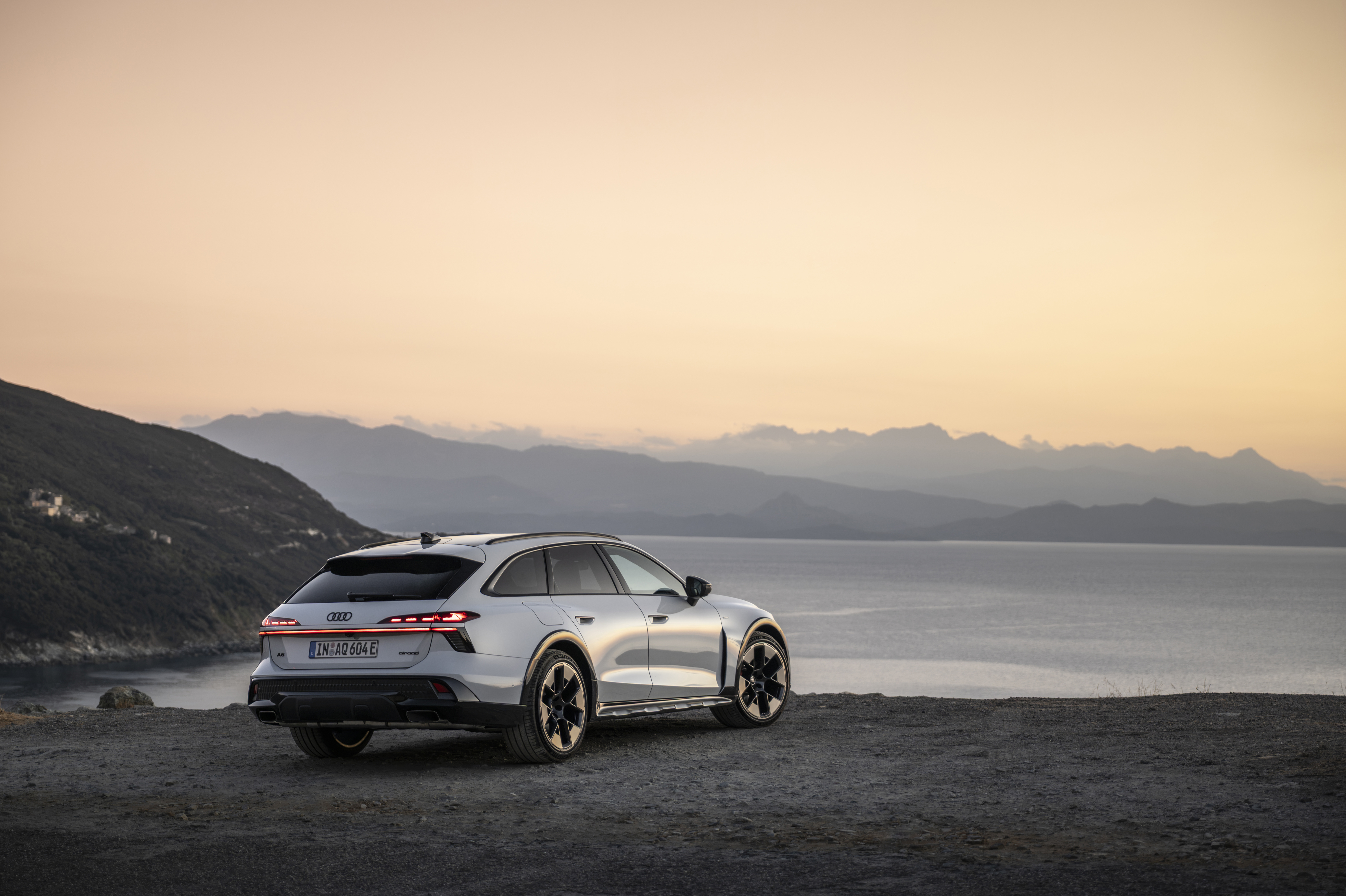
Maybe You Don’t Need an SUV
Something happened to the weekend car. Somewhere between mountain bikes, dogs, gravel roads and family luggage, we decided the only sensible answer was an SUV. Then the SUVs became taller, wider and heavier until a simple weekend in the mountains began to require a vehicle that looked capable of crossing the Kalahari unsupported.
The new Audi A6 allroad offers a quieter alternative. It takes the latest A6 Avant, gives it quattro all-wheel drive, adaptive air suspension, additional ground clearance and some useful protection underneath, but leaves the basic idea of the car intact. It is still a low, elegant estate designed to cover enormous distances comfortably.
That distinction is important. The A6 allroad is not trying to replace a Defender, Land Cruiser or serious 4x4. It is for the person whose idea of going outdoors involves 500 kilometres of good road, 80 kilometres of interesting road and perhaps the final 15 on gravel.
In South Africa, that describes an enormous number of very good weekends.
Business Class, With Gravel Underneath
The fifth-generation A6 allroad sits 34mm higher than an A6 Avant fitted with adaptive air suspension at its normal ride height. Select one of the off-road modes and the body can rise another 15mm, while a lift function provides a further 20mm at low speeds when the road becomes particularly rough. In total, the suspension offers 55mm of adjustment.
Quattro is standard, as is the adaptive air suspension. Audi has also given the car a dedicated offroad+ mode that works with the electronic stability systems to improve traction on loose surfaces. The displays can show ride height, pitch, roll angle, steering angle and a compass when you leave the tar.
None of this makes the A6 allroad a rock crawler, and that is exactly why it is appealing. It has enough ability for the road to a remote cottage, lodge, trailhead or campsite without forcing you to spend the preceding five hours driving something designed around the worst 500 metres of the journey.
That is the allroad philosophy at its best: prepare for the gravel without compromising the tar.
The V6 Diesel Is the One We Want
There are two particularly interesting powertrains. The plug-in hybrid combines a 2.0-litre petrol engine with an electric motor for 270kW and 500Nm, with up to 95km of WLTP electric range. It is an intelligent proposition for somebody who spends the working week commuting electrically before heading away at the weekend.
For South Africa, however, the 3.0-litre V6 TDI feels almost purpose-built. It produces 220kW and 580Nm, reaches 100km/h in a claimed 5.4 seconds and uses Audi’s MHEV plus mild-hybrid system.
The acceleration figure is amusing, but the torque is more relevant. South African road trips involve long distances, steep passes and a great deal of overtaking. Being able to move past a truck decisively on a two-lane road is considerably more useful than being able to win an imaginary drag race outside a hotel.
There is also something refreshingly appropriate about a large diesel estate designed to settle into a long journey. This is a car whose natural unit of measurement feels less like kilometres per hour and more like kilometres before lunch.
The Outdoors Shouldn’t Punish You on the Way There
The reason the allroad concept has always made sense is that outdoor capability does not require abandoning comfort. Inside, this remains an A6.
The cabin combines Audi’s 11.9-inch Virtual Cockpit with a 14.5-inch central OLED display, while a separate 10.9-inch passenger display is available. There are optional ventilated and massaging contour seats, four-zone climate control, acoustic glazing, a switchable panoramic glass roof and a Bang & Olufsen sound system with speakers integrated into the front headrests.
The specification sounds indulgent until you consider where this car makes the most sense. Johannesburg to the Drakensberg is several hours. Cape Town to the Cederberg is long enough to appreciate good seats. Crossing the Karoo can make poor refinement feel like a personal attack.
The ability to arrive somewhere remote without feeling as though you have spent the day getting there is part of the appeal.
And Yes, There Is Space for the Bikes
The V6 diesel offers 466 litres of luggage space with the rear seats in place and as much as 1,497 litres with them folded. The rear bench splits 40:20:40, there are roof rails for the equipment that does not belong inside, and the TDI can tow as much as 2,500kg.
That gives the A6 enough space for bicycles, golf clubs, camera equipment, hiking gear, a cooler and the mysterious quantity of luggage a two-night weekend inevitably produces. More importantly, it carries all of it without turning the car into a van with leather seats.
An estate has always understood something SUVs occasionally forget: outdoor living requires carrying a lot of things, but it does not necessarily require sitting a metre above them.
Where the A6 allroad Belongs
The best way to understand this Audi is not on a specification sheet. It is to imagine the journeys where its unusual combination of abilities starts making sense.
These are not extreme 4x4 expeditions. They are the South African trips where a beautiful road gradually becomes an imperfect one before delivering you somewhere worth the effort.
The Cederberg: The Obvious One
If there is a natural South African home for the A6 allroad, it may be the Cederberg. Leaving Cape Town, the N7 gives the car time to settle into the kind of fast, effortless long-distance driving an A6 does particularly well. As the city disappears and the mountains begin to dominate the horizon, the roads become more interesting and eventually the tar gives way to gravel.
Pakhuis Pass alone provides the sort of scenery that makes taking the longer route worthwhile. From there, destinations such as Bushmans Kloof make the proposition even clearer: several hours of comfortable high-speed touring followed by the kind of rougher final approach where additional clearance and quattro stop being brochure language and start becoming useful.
The Cederberg is not somewhere the A6 needs to conquer. That is precisely the point. Load the cameras and hiking shoes, put bicycles on the roof and let the car disappear beneath a layer of dust. It would probably look better for it.
The Northern Drakensberg: For the Long Way Home
From Johannesburg, the Northern Drakensberg presents a different version of the same argument. The journey begins with long highway kilometres before moving onto quieter country roads as the escarpment starts appearing in the distance.
A destination such as Montusi Mountain Lodge makes sense because the car’s job is not to be the adventure once you arrive. The mountains can handle that. The Audi’s job is to make getting there enjoyable enough that the journey becomes part of the weekend rather than the administrative task preceding it.
That is where an estate has an advantage. The lower seating position and more car-like proportions make a winding road something to enjoy rather than simply negotiate. On the way home, you would be tempted to ignore the fastest route and find another pass instead.
The Koue Bokkeveld: Pack More Than You Need
The Koue Bokkeveld may suit the allroad even better because the landscape rewards wandering. Beyond Ceres, the roads move through orchards, mountains and open farmland before increasingly remote routes pull you away from Cape Town.
This is where the car’s luggage space becomes part of the experience. Throw mountain bikes on the roof, camera bags in the back, food and wine underneath them and enough clothing to ignore the weather forecast. A place such as Mount Ceder gives the drive a destination, but the appeal is the freedom to keep exploring once you arrive.
There is no need for theatrical off-roading. Just good gravel, changing weather, a few questionable surfaces and the knowledge that turning down an unfamiliar road is unlikely to become an expensive mistake.
Sabi Sand: Let the Safari Vehicle Do the Safari
The Lowveld exposes one of the stranger assumptions behind SUV ownership: that because you are travelling somewhere wild, your own car needs to behave like a safari vehicle.
It doesn’t.
Once you arrive at a lodge in Sabi Sand, someone with an actual game vehicle will take you into the bush. Your car’s job is to deal with the long road from Johannesburg, the changing surfaces closer to the reserve and the final gravel approach without making any part of the journey unpleasant.
A destination such as Singita Boulders captures the logic perfectly. The experience at the other end is genuinely wild, but getting there rewards refinement just as much as ground clearance. You want quiet, excellent seats, effortless overtaking and enough suspension travel to stop worrying when the road deteriorates.
The A6 allroad does not need to pretend to be the safari. It just needs to get you there exceptionally well.
Or Skip the Lodge Entirely
Perhaps the most appropriate A6 allroad weekend does not end with a tasting menu and turned-down sheets.
Load a tent, chairs, proper coffee, hiking equipment, food and a camera. Fold one section of the rear seat, use the roof rails and find somewhere in the Cederberg where the phone signal disappears before the road does.
Adventure marketing has convinced us that going outside requires enormous tyres, recovery boards, rooftop tents and enough accessories to make a vehicle look as though it is permanently halfway to Botswana. Sometimes that equipment is necessary. Often, it isn’t.
Sometimes you simply want to leave on Friday afternoon and be somewhere completely different by dinner.
The A6 allroad understands the difference.
The SUV Question
Inevitably, somebody will ask why you would not simply buy a Q7.
The Q7 offers more vertical space, a higher driving position, seven-seat capability and greater visual authority. For some families, it is unquestionably the more useful car.
The A6 allroad offers something different: a lower centre of gravity, an estate silhouette, a more car-like driving position and considerably less visual bulk. It feels designed primarily to travel quickly and comfortably across a country, with enough additional ability to deal with whatever happens during the final part of the journey.
That is not a compromise for somebody who enjoys driving. It may be the preference.
We’d Keep the Wheels Small
Audi fits 19-inch wheels as standard, with 20- and 21-inch options available. For South Africa, we would leave the 21s in the configurator.
Give us the V6 diesel, 19-inch wheels, the most sensible tyre sidewall available, roof rails and a deep green, brown or restrained metallic paint. Add the good seats and the Bang & Olufsen system, then stop ticking boxes.
The A6 allroad should not look like an accessory catalogue. Its appeal lies in understatement. A little mud along the doors and dust across the rear window would do more for it than another black styling package ever could.
The SKR Perspective
The Audi A6 allroad represents an increasingly rare kind of premium motoring: capability without performance theatre. It does not need seven seats because not everyone has seven people to carry. It does not need enormous ground clearance because not every weekend involves crossing a river. And it does not need to look military simply because its owner occasionally goes hiking.
Instead, Audi has taken an excellent long-distance estate and expanded the number of roads it can comfortably use. That sounds like a modest achievement until you consider what it changes. You take the gravel turn-off. You choose the cottage further up the mountain. You bring the bicycle. You pack the camera. You drive home through the pass instead of around it.
That is what the best outdoor equipment does. It does not constantly advertise its capability; it quietly increases the number of things you can say yes to.
South Africa would suit the A6 allroad unusually well because this is a country where some of the best places sit at the end of very long roads. We have mountain passes that reward the journey, gravel roads that lead somewhere extraordinary and distances large enough to make comfort matter.
You could buy another SUV. Most people probably will.
But the A6 allroad offers a more interesting proposition: a car that makes the road to the outdoors as desirable as the outdoors itself.
Key Details
Model: Audi A6 allroad quattro Generation: Fifth generation Drivetrains: 3.0-litre V6 TDI MHEV plus or 2.0 TFSI e-hybrid V6 TDI: 220kW and 580Nm 0–100km/h: 5.4 seconds for the V6 TDI e-hybrid: 270kW and 500Nm Electric Range: Up to 95km WLTP for the e-hybrid Drive: quattro all-wheel drive as standard Suspension: Adaptive air suspension as standard Suspension Adjustment: 55mm overall range Luggage Capacity: Up to 1,497 litres in the V6 TDI Maximum Towing Capacity: 2,500kg for the V6 TDI South African Availability: The new A6 allroad is not currently listed in Audi South Africa’s local A6 range.
Verdict
The A6 allroad is not an off-roader pretending to be sophisticated. It is a sophisticated estate that accepts that the tar eventually ends.
For South Africa, that may be the more useful talent.
Take the long road. Bring too much. Turn onto the gravel.
Short Sources
Audi AG — New Audi A6 allroad quattro Audi AG — A6 allroad technical specifications and drivetrain information Audi South Africa — Current A6 model range