Champagne Season Has Started
There is something about the beginning of a South African summer that makes Champagne particularly difficult to resist.
Long lunches become longer. The sun stays around. Restaurants move tables outside. December calendars begin filling before November has properly arrived, and suddenly there is a perfectly rational reason for a bottle of Champagne at three in the afternoon.
The mistake is assuming every occasion requires the same bottle.
The best Champagne for oysters beside a pool is not necessarily the bottle we would open with roast lamb at Christmas. A rich Pinot Noir Champagne has little in common with a bone-dry Chardonnay, while great rosé deserves to be treated as far more than the prettier option in the ice bucket.
These are SKR’s five Champagnes for the season — selected not because they carry the five loudest labels, but because each brings something genuinely different to the table.
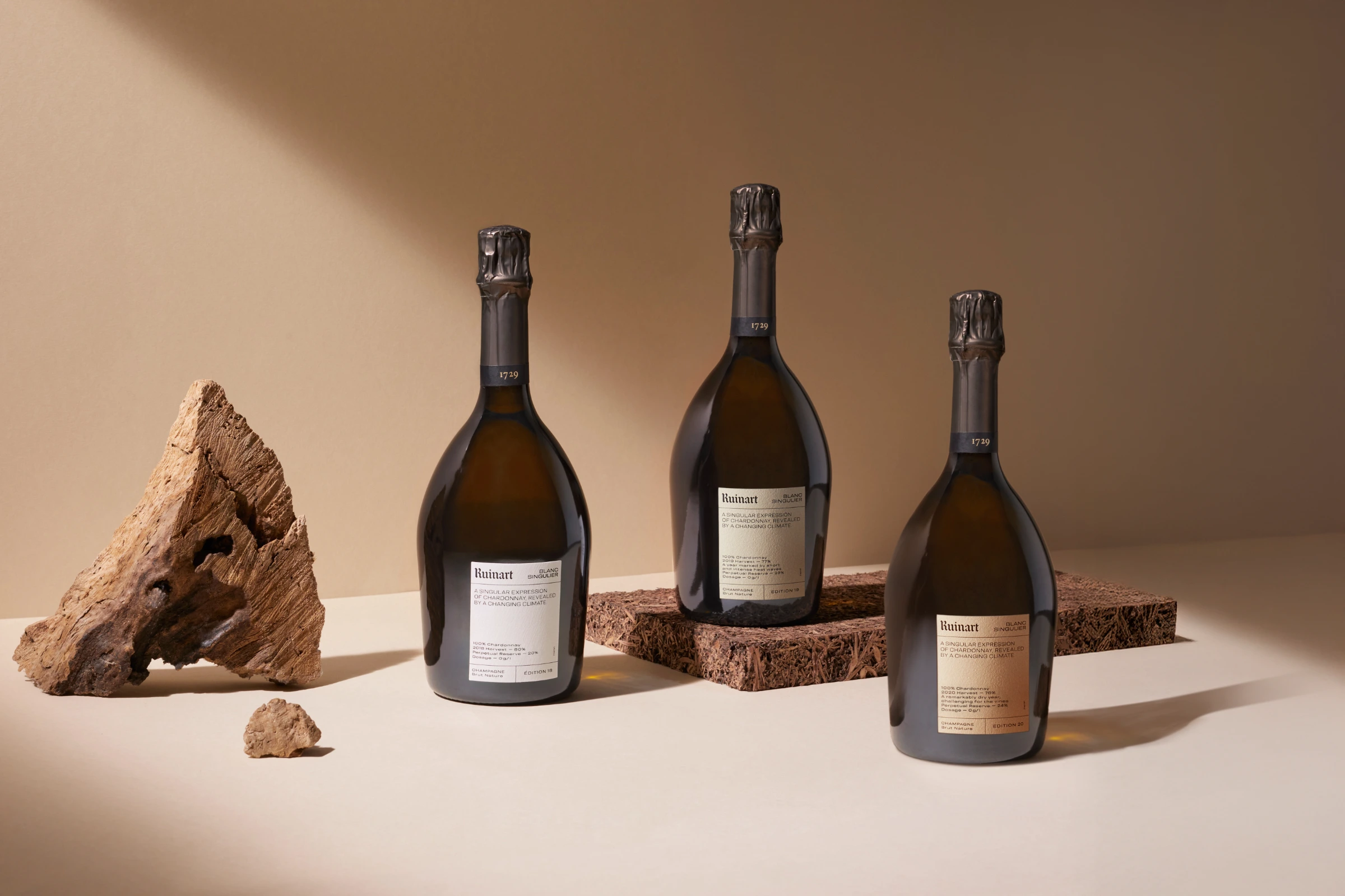
1. Ruinart Blanc Singulier Édition 20 The one for a hot afternoon
If there is one bottle here that feels particularly right for summer, it is Ruinart Blanc Singulier Édition 20.
Ruinart created Blanc Singulier to explore what warmer growing conditions are doing to Chardonnay in Champagne. Édition 20 is based predominantly on the 2020 harvest — 76% of the blend — with the remaining 24% coming from reserve wines. It is made entirely from Chardonnay and finished as Brut Nature, giving it a drier, more direct personality than the classic Ruinart Blanc de Blancs.
What makes it interesting is that it does not taste like an attempt to reproduce the Champagne of twenty years ago. The wine is responding to a warmer climate, with richer fruit countered by tension and acidity.
Serve it properly cold but not frozen — Ruinart recommends around 10–12°C — and use a proper white-wine or tulip-shaped glass rather than a narrow flute.
This is the bottle for oysters, sashimi, grilled line fish, ceviche or the first course of a very long lunch.
SKR occasion: Clifton at sunset, a Franschhoek lunch, or seafood somewhere you can still see the water. Why we want it: It feels contemporary without becoming gimmicky.
2. Bollinger PN TX20 The one for people who usually drink red wine
Some Champagne whispers. Bollinger generally does not.
PN TX20 is made entirely from Pinot Noir, with Tauxières in the Montagne de Reims at the centre of the blend and 2020 as the base year. Reserve wines from earlier years — including 2008 and 2012 — account for more than a quarter of the composition.
That gives it considerably more weight than the Champagne people instinctively reach for as an aperitif.
There is citrus and stone fruit, but also the depth, vinosity and structure that make Pinot Noir Champagne interesting with food. Bollinger recommends serving it at 10–11°C, and we would listen. Too cold and much of the reason for buying it disappears.
This is Champagne for a table rather than merely an arrival. Grilled langoustines would work. So would duck, pork belly, mushroom dishes or even a serious piece of beef if you enjoy ignoring unnecessary wine rules.
SKR occasion: Christmas lunch when somebody insists Champagne cannot stay on the table for the main course. Why we want it: It has enough personality to convert the person who normally asks for Burgundy.
3. Billecart-Salmon Cuvée Elisabeth Salmon 2012 The rosé that deserves the main course
Rosé Champagne has suffered from being extraordinarily photogenic. The colour encourages us to treat it as the celebratory bottle — the one ordered because the table looks better with it.
Billecart-Salmon Elisabeth Salmon 2012 deserves considerably more respect than that.
Created in honour of house co-founder Elisabeth Salmon, the 2012 is made from 55% Chardonnay and 45% Pinot Noir sourced entirely from Grand Cru and Premier Cru vineyards. It spent 115 months ageing in the cellar and has a very low dosage of 3.8g/l.
That translates into a rosé with real structure rather than simple strawberry sweetness. Billecart describes citrus peel, wild strawberry, raspberry, blood orange and a chalky finish, but what matters is the combination of maturity and freshness.
This is one to put into a proper glass and leave there for a while. Billecart recommends serving it at 11–12°C and suggests food such as langoustines or poultry. We would happily take it further.
SKR occasion: A summer dinner where the bottle is meant to be remembered. Why we want it: It makes the phrase “serious rosé” feel unnecessary.
4. Krug Grande Cuvée 173ème Édition The one-bottle solution
If we were told to choose one Champagne and stop complicating things, this would probably be it.
Krug Grande Cuvée 173ème Édition is constructed around the 2017 harvest but contains 150 individual wines from 13 different years, stretching back to 2001. Reserve wines make up 31% of the final blend. The composition is 44% Pinot Noir, 34% Chardonnay and 22% Meunier.
That is an absurd amount of effort to make something that can disappear surprisingly quickly around a table.
Krug’s idea has always been more interesting than simply producing a prestige vintage in good years. Grande Cuvée attempts to create the fullest possible expression of Champagne through blending across years, villages and grape varieties.
That gives it range. You can drink it before dinner. You can leave it on the table during dinner. You can drink whatever remains after dinner. It has enough freshness for shellfish and enough depth for richer food.
The only real mistake is serving it so cold that all that complexity becomes an expensive version of sparkling water.
SKR occasion: The table where nobody wants to change wines between courses. Why we want it: If Champagne is fundamentally an art of blending, few bottles make the argument more convincingly.
5. Laurent-Perrier Grand Siècle Iteration No. 26 The bottle you open when the dinner matters
Grand Siècle begins with a fascinating rejection of conventional wisdom. Laurent-Perrier does not believe the greatest expression of Champagne necessarily comes from one exceptional vintage. Instead, it blends several exceptional vintages in an attempt to create the balance that no single year can provide.
Iteration No. 26 combines 2012, 2008 and 2007 — 65%, 25% and 10% respectively — using 58% Chardonnay and 42% Pinot Noir from eight Grand Cru villages. It then spends ten years ageing on the lees.
The result has received exceptional critical recognition, including 100-point assessments cited by the house. But scores are not why it is here.
Grand Siècle No. 26 has the sort of depth that makes you stop treating Champagne as something consumed before the “real wine” arrives. Laurent-Perrier describes citrus, hazelnut, honeysuckle, almond and honey alongside a mineral structure.
This belongs with food: turbot, lobster, truffle, poultry, something involving excellent butter. Or nothing at all, provided the glasses are good and nobody is in a hurry.
SKR occasion: The dinner you have been planning for three weeks. Why we want it: It demonstrates that blending can be every bit as prestigious as vintage.
The Five at a Glance
Ruinart Blanc Singulier Édition 20 — Dry, bright and Chardonnay-led. We would drink it with oysters, sashimi and seafood. Bollinger PN TX20 — Rich, structured and Pinot Noir-driven. We would drink it with duck, pork and mushrooms. Billecart-Salmon Elisabeth Salmon 2012 — Precise and complex rosé. We would drink it with langoustines and poultry. Krug Grande Cuvée 173ème Édition — Deep, layered and extraordinarily versatile. It can carry almost the entire meal. Laurent-Perrier Grand Siècle No. 26 — Mature, elegant and gastronomic. We would pour it with turbot, lobster and truffle.
One More Thing: Lose the Flute
If you are opening one of these bottles, give it some space. The very narrow Champagne flute is excellent at producing a beautiful column of bubbles and less impressive at allowing a serious wine to express itself. Ruinart itself recommends a tulip or white-wine glass for Blanc Singulier.
We would extend the advice to the entire list. A good universal wine glass is enough. Champagne is wine first. The bubbles are simply part of what makes it extraordinary.
The SKR Perspective
There is a tendency to buy Champagne according to hierarchy: the more famous label, the more expensive bottle, the rarer vintage, the recognisable box. That misses much of the pleasure.
The interesting question is not “What is the best Champagne?” There isn’t one. The better question is “What do I want this bottle to do?”
For a hot afternoon, we want the tension of Ruinart Blanc Singulier. For a long lunch, Bollinger PN TX20 has enough weight to stay on the table. For rosé, Elisabeth Salmon is operating on another level. Krug is the bottle we could happily drink from arrival until dessert. Grand Siècle is what we open when dinner itself is the occasion.
And that is probably the only rule worth keeping this season. Don’t save Champagne for celebrations so important that the bottle becomes ceremonial. Open the good one while everyone is still there.
SKR’s Five
Best for summer: Ruinart Blanc Singulier Édition 20 Best with food: Bollinger PN TX20 Best rosé: Billecart-Salmon Elisabeth Salmon 2012 Best all-rounder: Krug Grande Cuvée 173ème Édition SKR Pick: Laurent-Perrier Grand Siècle Iteration No. 26
Sources Ruinart — Blanc Singulier Édition 20 Champagne Bollinger — PN TX20 Billecart-Salmon — Cuvée Elisabeth Salmon 2012 Krug — Grande Cuvée 173ème Édition Laurent-Perrier — Grand Siècle Iteration No. 26