Goyard Has Gone Green
Not environmentally.
Visually.
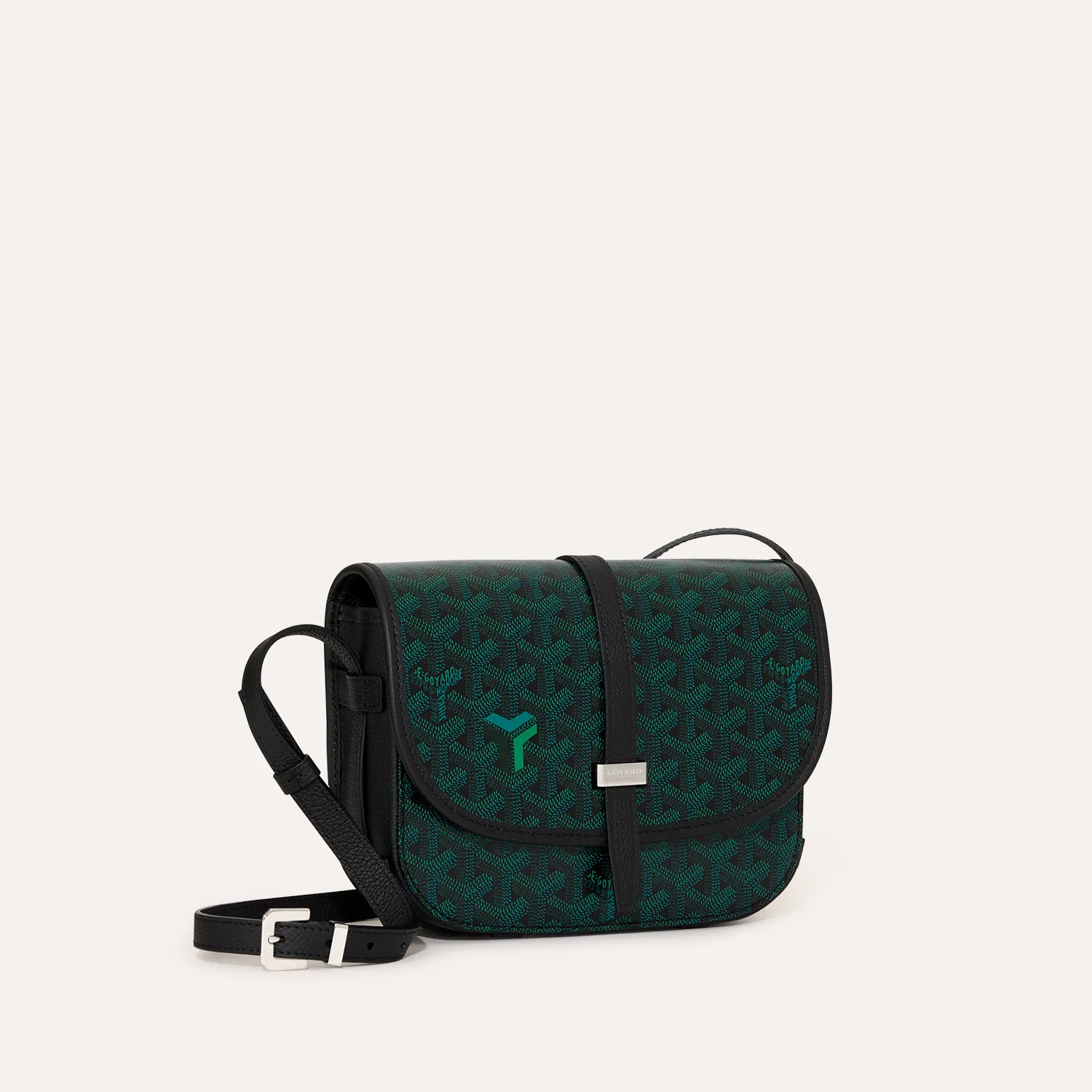
For its latest limited-edition collection, Goyard has taken some of its most recognisable pieces and covered them in Evergreen Goyardine, a deep forest-toned interpretation of the maison’s signature canvas.
The collection extends across luggage, bags, small leather goods and accessories, with pieces receiving distinctive hand-painted details through Goyard’s traditional Art of Marquage.
There is no radical new silhouette.
No attempt to reinvent the handbag.
No celebrity collaboration required to explain why anybody should care.
Mostly, Goyard changed the colour.
And somehow that is enough.
The Colour Is the Product
Evergreen combines shades of green across Goyard’s familiar chevron pattern, paired with contrasting leather details and polished hardware.
It is immediately recognisable as Goyard.
But not quite the Goyard you have seen before.
That distinction is where the collection works.
Luxury houses constantly face a difficult problem.
Customers expect novelty.
But too much novelty can destroy the recognisability that made the brand valuable in the first place.
Change too little and the product feels stale.
Change too much and it stops feeling like yours.
Evergreen sits neatly between the two.
Goyard Understands Recognition
Place a Goyard bag across a room and most people interested in luxury will recognise it before they can read anything printed on it.
That is an extraordinarily valuable position.
The repeating chevron of Goyardine has become a visual signature in the same way that Louis Vuitton has its Monogram or Burberry its check.
A strong luxury code reduces the need for explanation.
You see it.
You know it.
That is why Goyard does not need to redesign the entire object every season.
The pattern is already doing much of the work.
The Hand-Painted Details Matter
Look closer and Evergreen becomes more interesting.
Goyard says pieces in the collection receive distinctive, piece-specific hand-painted chevron treatments inspired by its Art of Marquage.
That introduces something increasingly valuable into modern luxury.
Variation.
Industrial luxury has become exceptionally good at producing objects that are almost impossibly consistent.
The same stitching.
The same hardware.
The same finish.
The same product in Paris, Tokyo, New York or Johannesburg.
Handwork introduces controlled imperfection.
One piece does not need to look absolutely identical to another.
That makes ownership feel slightly more personal.
Luxury Has a Novelty Problem
Fashion operates at an exhausting speed.
New season.
New collection.
New colour.
New collaboration.
New creative director.
New campaign.
New celebrity.
New object supposedly capable of replacing the object everybody was told to desire six months earlier.
Eventually, novelty stops feeling new.
Goyard operates differently.
The house remains unusually protective of its identity.
Its products evolve, but rarely at the speed demanded by the wider fashion cycle.
That restraint can occasionally appear conservative.
It can also look remarkably confident.
Evergreen does not ask Goyard to become something else.
It simply gives collectors another reason to look at what was already there.
A Briefcase Does Not Need Reinvention
The image that perhaps explains the collection best is one of the simplest.
A Goyard briefcase.
A trunk.
Both in Evergreen.
There is nothing conceptually revolutionary about either object.
That is almost refreshing.
The briefcase remains a briefcase.
The trunk remains a trunk.
Their appeal comes from proportion, material, craft and identity rather than some desperate attempt to create a viral silhouette.
Luxury sometimes forgets that an object does not have to be unprecedented to be desirable.
It simply has to be exceptionally itself.
Green Works Particularly Well on Goyard
There is also a less intellectual explanation for why Evergreen succeeds.
It looks good.
The dark green gives Goyardine greater visual depth without overwhelming the pattern.
Black leather creates structure around it.
Metal hardware provides contrast.
The result feels richer and quieter than many brighter seasonal executions.
Green also makes sense for a house so strongly associated with travel.
It feels outdoorsy without becoming technical.
Traditional without becoming brown.
Distinctive without becoming loud.
It is seasonal colour used with restraint.
Scarcity Does the Rest
Evergreen is limited edition.
Of course it is.
Scarcity has become one of luxury’s most effective commercial tools because it changes the purchasing question.
The customer is no longer simply asking:
Do I want this?
They are also asking:
Will I still be able to get it later?
That urgency can manufacture demand.
But scarcity works best when the underlying object was already desirable.
Otherwise, “limited edition” is simply a polite way of saying there are fewer examples of something nobody particularly wanted.
Goyard does not have that problem.
Its established products already possess an audience.
Evergreen simply makes familiar objects temporarily unfamiliar.
The Collection Is Bigger Than One Bag
The treatment extends across a curated selection of Goyard classics rather than being attached to a single hero product.
That matters.
A colour becomes more powerful when it behaves like a collection rather than an isolated SKU.
A traveller can theoretically build an entire Evergreen set.
Luggage.
Bag.
Small leather goods.
Accessories.
Even specialist trunks and cases.
There is something wonderfully excessive about matching Goyard luggage.
Nobody needs it.
Luxury was never particularly interested in need.
Goyard Is Selling Continuity
There is a tendency to think successful luxury brands constantly predict what comes next.
The better ones often do something else.
They make customers want what they have always made.
Herms does not need to reinvent the Birkin every year.
Porsche does not need to make the 911 unrecognisable every generation.
Rolex does not need the Submariner to stop looking like a Submariner.
Continuity itself becomes desirable.
Goyard understands the same principle.
The product can evolve.
The identity